Do you need a CRM, or do you just need better follow up?
Many businesses do not need a CRM straight away. They need a better follow up process first. When leads are being forgotten, quotes are not being chased, and customer conversations are scattered across email, social media and notebooks, the problem is often not the lack of software. It is the lack of a clear system.
What is the difference between a CRM and better follow up?
A CRM is a tool. Better follow up is a process.
That difference matters more than many businesses realise. A CRM can help you store contact details, track conversations, manage opportunities and set reminders. It can give you visibility over your pipeline and make it easier to keep on top of customer relationships.
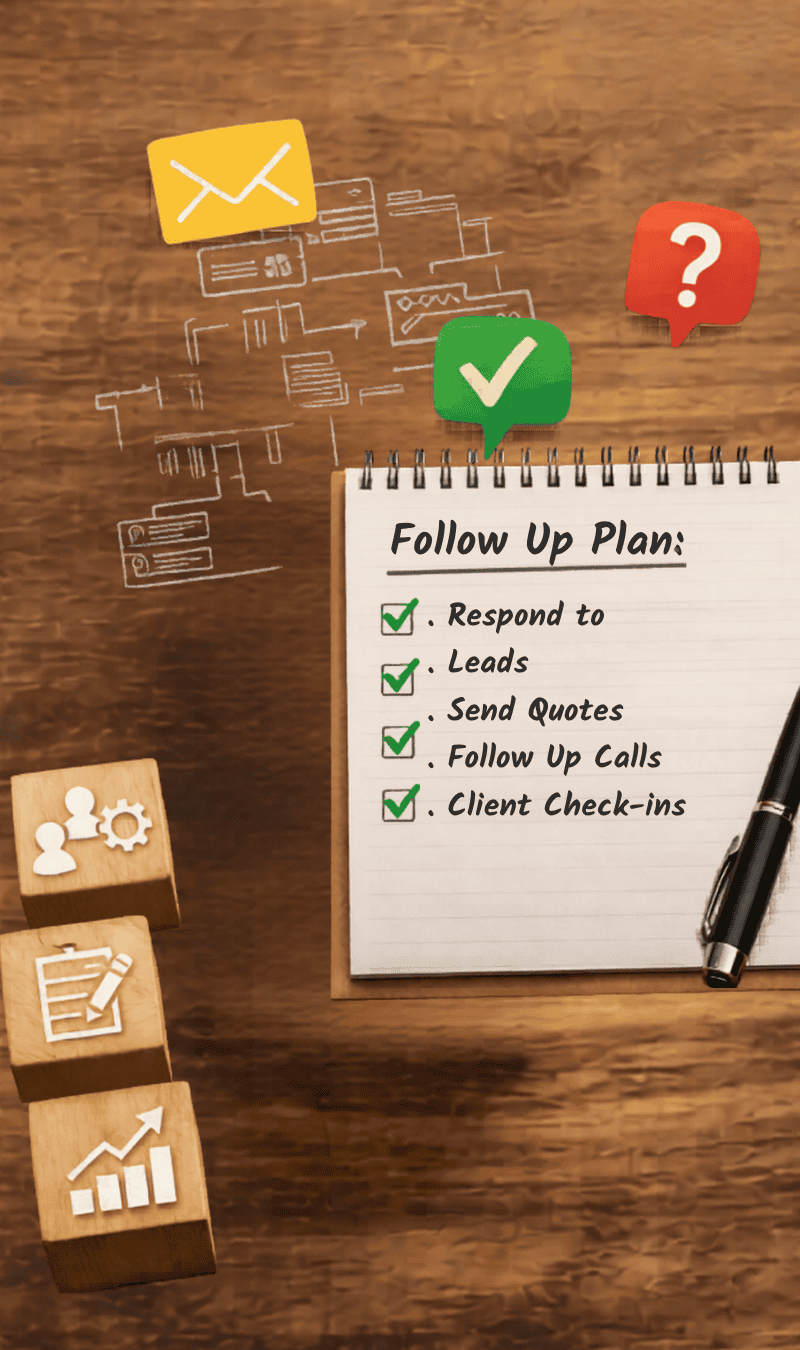
Better follow up, though, is about what actually happens after somebody shows interest. It is the rhythm behind the scenes. You need to know who replies, how quickly they reply, what happens after the first conversation, when a quote is chased, and when someone is contacted again if they are interested but not ready. Existing customers also need to be kept warm, informed and looked after.
When that process is unclear, adding a CRM will not fix it. It will simply move the confusion into a different place.
Why many small businesses do not need a CRM straight away
This is where a lot of small businesses get caught out. Things start to feel busy and a bit untidy, so a CRM sounds like the next logical step. Sometimes it is. Often, though, the real issue is that follow up has been left to memory, good intentions and whatever there is time for that day.
That usually shows up in small ways at first. An enquiry is answered quickly one day but left too long the next. A quote is sent, but no one comes back to it. Someone says they are interested, but there is no plan for when to check in again. Existing customers hear from you when there is a problem, but not always in between.
None of this means the business is failing. In fact, it often happens when the business is growing and trying to keep up. What it does mean is that there is a gap between getting interest and handling it consistently.
Before you invest in software, it is worth fixing that gap first.
Signs your business needs a better follow up process
If you are not sure whether the issue is the system or the software, the easiest place to start is by looking at what happens day to day.
When new enquiries are coming in and sitting in different places, that points to a follow up problem. Quotes being sent without anyone chasing them is another sign. The same applies if you are relying on your inbox, your memory or scraps of paper to remember who needs what. Even existing clients only hearing from you when there is a task to do or a problem to solve can suggest the process is too reactive.
In other words, if the business does not have a clear and repeatable rhythm for handling interest and communication, that is the first thing to sort out.
How to put a simple follow up system in place
The good news is that this does not need to be complicated.
A simple follow up system starts by mapping out the journey from first enquiry to next step. When someone gets in touch, where does that enquiry land? Who responds? How quickly should they get a reply? After that first response, what happens next? Once a quote is sent, when should it be followed up? If someone is not ready yet, when do they go on a future check in list? If an existing customer goes quiet, how do you stay in touch without being pushy?
Writing that down changes things quickly. You are no longer relying on memory. Instead, you are creating a basic process the business can actually follow.
The next step is to keep everything in one visible place. For some businesses, that can be as simple as a spreadsheet or shared tracker with columns for name, enquiry date, stage, last contact and next action. It does not need to be clever. It just needs to show what is live, what is waiting and what needs doing next.
Then you can add a few simple rules. New enquiries are replied to within a set timeframe. Quotes are chased after a certain number of days. Leads that are interested but not ready are given a future follow up date. Existing clients have regular touchpoints so they do not only hear from you when something goes wrong.
That is a system. It may be simple, but it is still a system. For many small businesses, that alone is enough to improve consistency and stop opportunities slipping through the cracks.
When a basic tracker is enough
Not every business needs a full CRM at the stage it is in now.
For a business with a manageable number of enquiries, one or two people involved, and a straightforward sales process, a basic tracker may do the job perfectly well. In fact, that can often be the better option because it is easier to keep updated and easier to use consistently.
There is a lot of pressure to adopt bigger tools before they are really needed. A simple system that your business actually uses is far more valuable than a more advanced platform that ends up half completed and ignored.
Sometimes the most reliable answer is not more software. It is more clarity.
When your business is ready for a CRM
A CRM starts to make more sense when your business has outgrown manual follow up.
That may be because leads are coming in from several places and are becoming harder to track. In some businesses, the trigger is that more than one person is involved and better handovers and visibility are needed. For others, it is the need for task reminders, simple automation, reporting or a clearer picture of what is happening in the pipeline.
At that point, a CRM can be a very useful next step. Notice, though, that the real reason for introducing it is not just that things feel untidy. The real reason is that the business now has enough volume or complexity to justify a stronger system.
That is the right time to bring one in. It should support a process that already makes sense, not replace one that has never been defined.
Do you need a CRM now, or do you need better follow up first?
For many businesses, the answer is better follow up first.
Get clear on what should happen when someone enquires. Decide who owns each stage. Create a visible tracker. Put timeframes around responses and follow ups. Make sure existing customers are not forgotten while you are chasing new work.
Once that rhythm is working, it becomes much easier to see whether a CRM is genuinely needed. When the process is clear but the manual handling is becoming too clunky, that is usually the sign that it is time to upgrade.
In other words, sort the follow up first. Then choose the system that supports it.
That approach is often more practical, more cost effective and far less frustrating than jumping into a CRM before the groundwork has been done.
Recent Comments